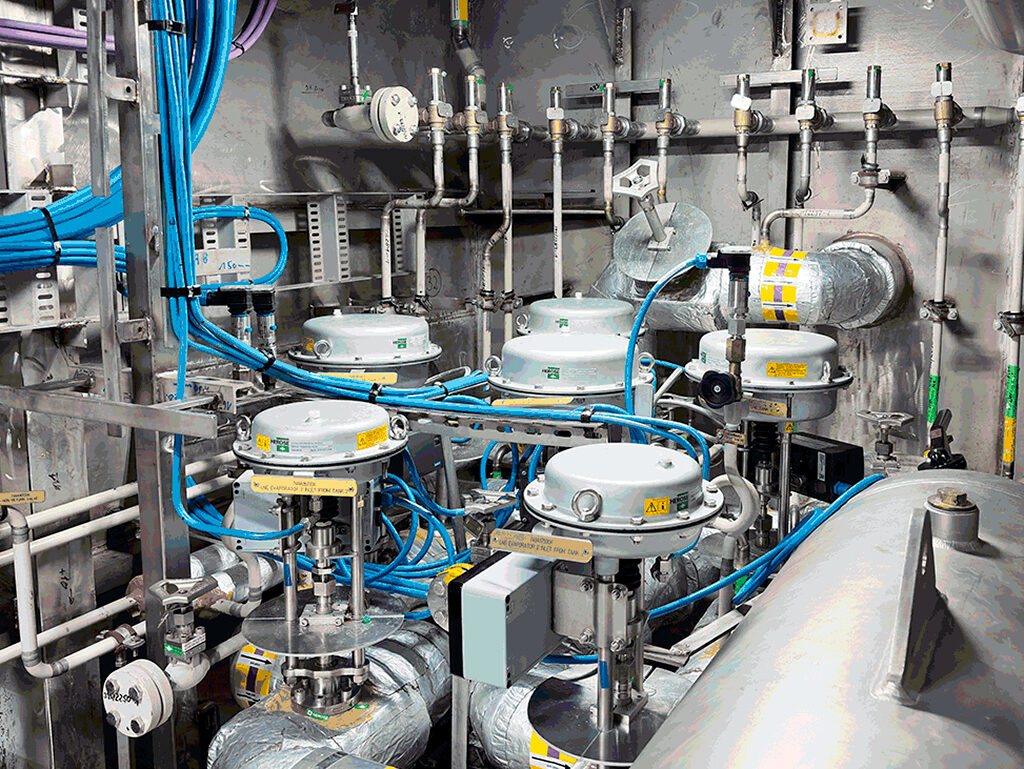
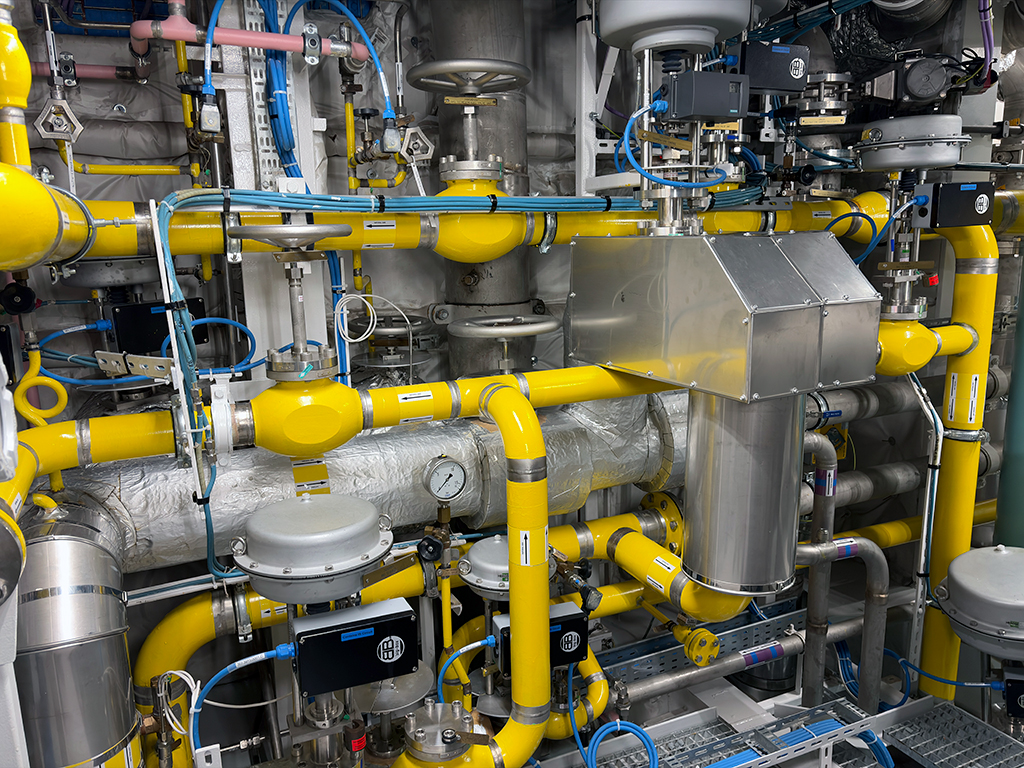
All systems on the Costa Toscana were checked and overhauled – HEROSE service specialists were on board to work on the numerous valves in the gas system.
Regular inspections are carried out to ensure the safety and seaworthiness of ships. The most comprehensive inspection takes place every five years – this is known as class renewal, which covers all technical systems, protective equipment and the structure. To do this, the ship is taken out of the water in dry dock. For the Costa Toscana, this was the first major inspection since it entered service in 2022.
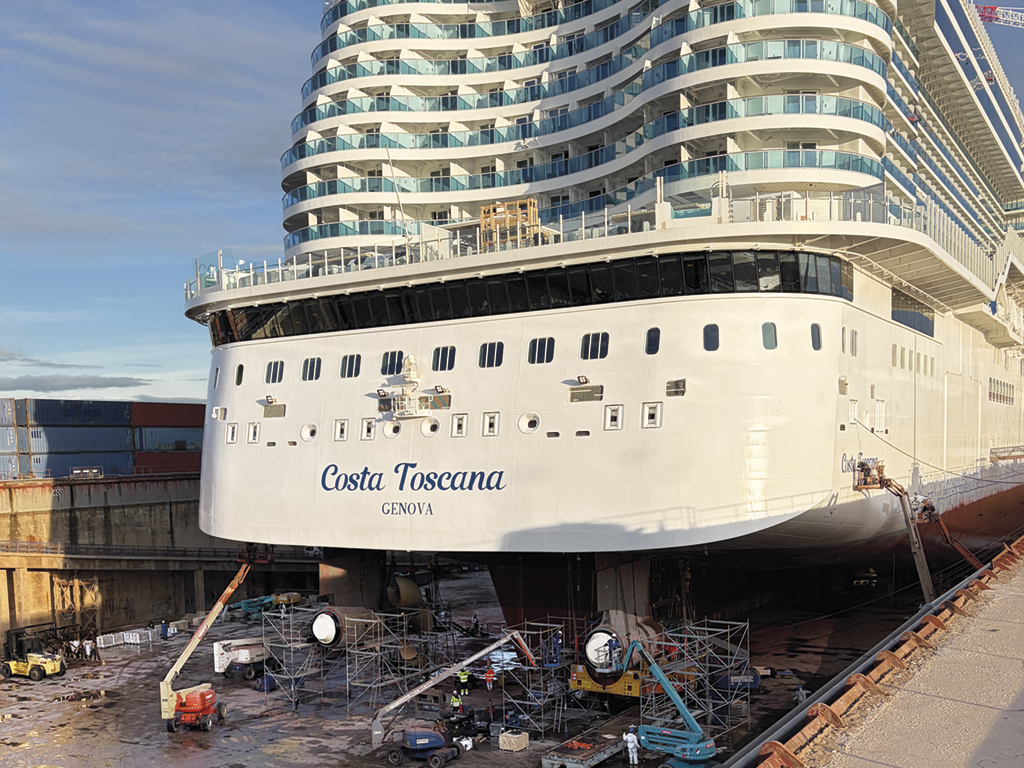 Every five years, when the ship is due for a class renewal, it is taken out of the water: time for essential maintenance work.
A fascinating ship with state-of-the-art technology
The Costa Toscana is one of the most modern cruise ships in the world. It is 337 metres long and can accommodate 6,500 passengers and 1,800 crew members – the ship is a floating smart city. The four Caterpillar MaK 16M-46DF dual-fuel engines can run on both LNG (liquefied natural gas) and marine diesel and generate a total of 61,760 kilowatts. The engines run on LNG more than 90 per cent of the time, which significantly reduces emissions. The ship is powered by two Azipod drives, whose propeller nacelles can be rotated 180 degrees, eliminating the need for a classic rudder.
Dry-docking every five years
The Chantier Naval de Marseille shipyard offers one of the largest dry docks in the Mediterranean. Here, the Costa Toscana rests on hundreds of keel blocks. As you approach the harbour, the ship, with its yellow funnel, can be seen from afar. The closer you get, the more impressive the sight becomes. In the dry dock, not only are the 20 decks visible, but also the lower part of the ship – the approximately 8.6 metres that are normally submerged in water. From keel to the highest point, the ship measures around 72 metres. An impressive sight in every respect
Italy is home but the service personnel are international
As soon as you step onto the gangway and board the ship, the atmosphere subtly shifts to an unmistakably Italian vibe, as the vessel proudly calls Genoa its home port. On board the scene is vibrant and highly coordinated, reminiscent of a well-organised beehive. More than 1,000 technicians, tradespeople and specialists from around the world are hard at work testing, refurbishing and redesigning various areas of the ship. Planning and carrying out such an extensive amount of work is a monumental undertaking. The checklist for the LNG system alone spans four densely filled pages. With just under two weeks in dry dock, every moment counts and inspectors from the classification society RINA closely follow each phase of the work with a trained eye.
Service – the basis for reliable operation
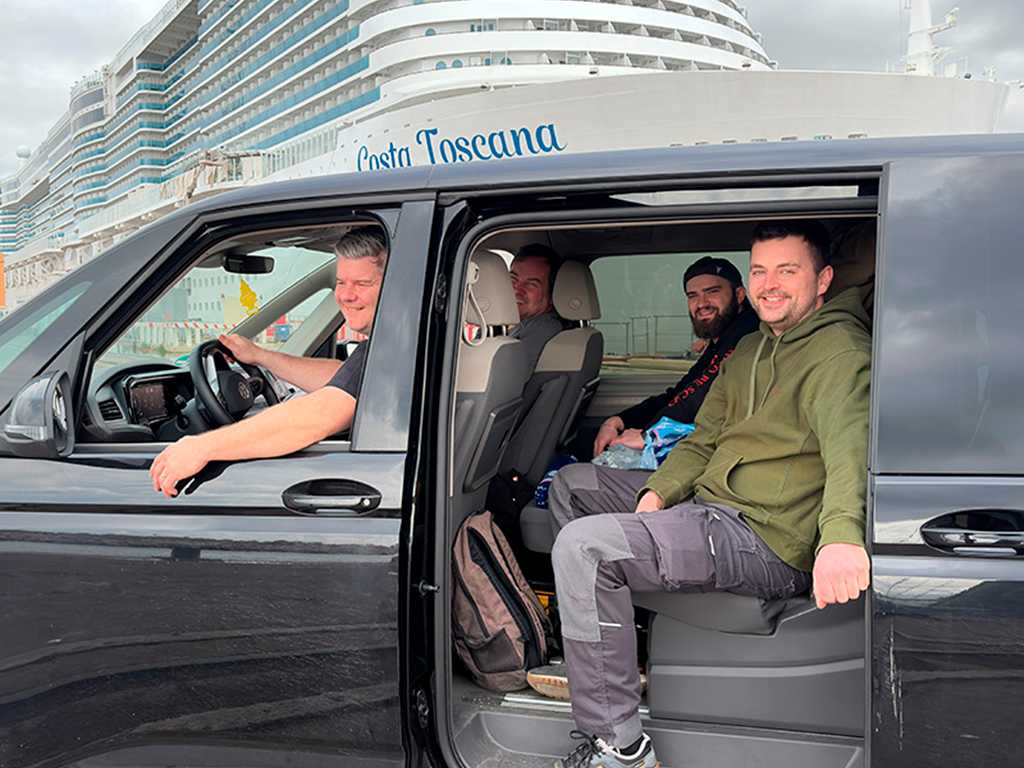
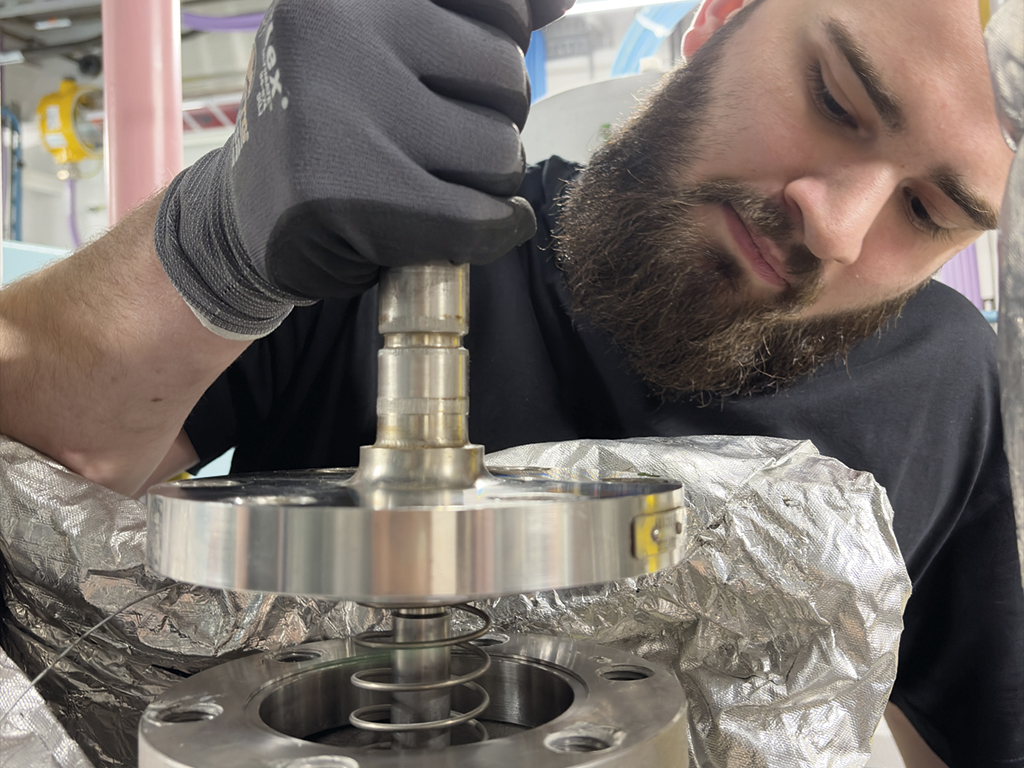
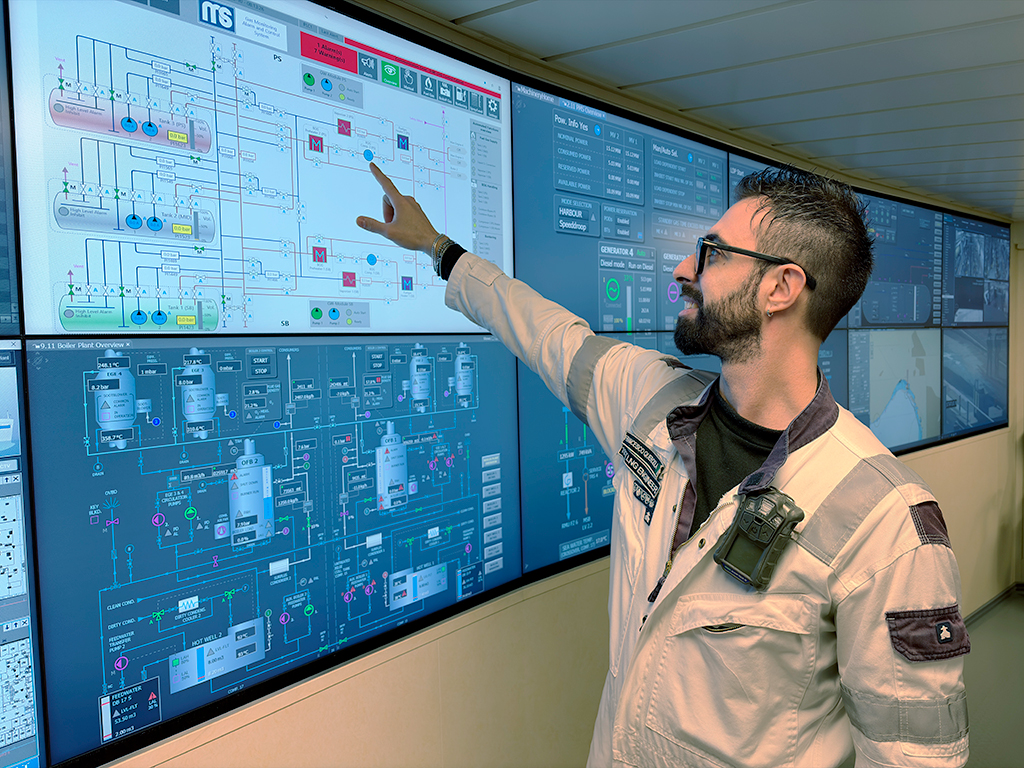
Reliable technical service is a cornerstone of safe and efficient ship operations. This is particularly true for safety-critical gas systems, where specialised expertise plays a vital role in safeguarding people, the environment and assets over the long term. The HEROSE service team’s work on board the Costa Toscana begins during ongoing passenger operations, beginning with the valves in the bunker station – components that are subject to strict oversight by RINA inspectors. Once the Costa’s LNG engineers have secured and fully prepared the system, the HEROSE team proceeds through the extensive service checklist in close coordination with the Costa’s engineers, all united by a shared objective: ensuring the integrity and safety of the LNG installation. During the dry dock phase, additional colleagues travel from Bad Oldesloe to Marseille, bringing with them necessary tools and spare parts to support the work on-site.
Strong teamwork is the key to maximum safety and efficient performance.
Giulio Valestra, Captain of the Costa Toscana
Service with a wealth of expertise and a dose of ingenuity
Many of the valves on board are located in hard-to-reach places: the tank connection space is cramped and full of technical installations, and there is the added difficulty that the upper parts of the large valves can weigh over 100 kilograms – so every move during removal and installation must be precise. Chain hoists and rope hoists are then used to pull the upper parts out of the valve body. A suitable suspension point must be found for this – sometimes the space is too low, e.g. above the large LNG tanks. The service team relies on a blend of long-standing experience and practical ability to manage the diverse challenges they encounter. Even the heaviest valve components must be positioned with absolute precision during assembly, as the slightest misalignment can damage the disc or sealing elements. The seasoned HEROSE technicians know exactly how to prevent such issues. “It’s often like performing a delicate operation,” notes Sebastian Ohly – a task that sometimes calls for several pairs of hands. Every moving part is inspected, seals are replaced and gland packings are renewed to ensure the system operates reliably.
A good warm-up is a prerequisite for the service
Only once every five years is the LNG system completely emptied of gas and brought from minus 16 degrees Celsius to ambient temperature. This warm-up is necessary so that all important components in the fuel gas supply system can be inspected and overhauled, including the tanks, pumps and numerous valves. During ship operation, the tank connection space rooms are alarm-secured Ex-zones with a protective atmosphere that can only be entered via a double barrier in an emergency. To safely bring the system to a gas-free condition, the engineers follow a carefully planned sequence of steps. The tanks must be gradually emptied and the entire system slowly warmed. To create safe working conditions, any remaining combustible gases are removed from the tanks and piping, which are then inerted with nitrogen before ambient air is reintroduced. The tank walls, although made of sturdy steel, are relatively thin considering the tank’s overall dimensions. Inside, specialists perform detailed inspections for even the smallest cracks, using advanced rope-access techniques. Any areas requiring welding are identified and agreed upon in coordination with RINA inspectors.
We like HEROSE Valves – we’ve never had a problem with them.
Francesco Querciola, LNG engineer on the Costa Toscana
Green light to continue using LNG
After servicing, the RINA inspectors approve the LNG system and authorise its continued use. To remove any moisture from the system, it is inerted with nitrogen. Otherwise, ice crystals could form in the tank and pipes, which could be dangerous for the valves, pumps and filters. The liquid nitrogen is delivered to the ship, which is still docked, by tanker truck. It is then cooled down carefully and slowly – the temperature is lowered by 10 degrees Celsius per hour. Cooling down the entire gas system is a critical phase; the components must not be exposed to cold stress. Once the system has been cooled down, the first refuelling process after the inspection follows a few days later.
HEROSE Service
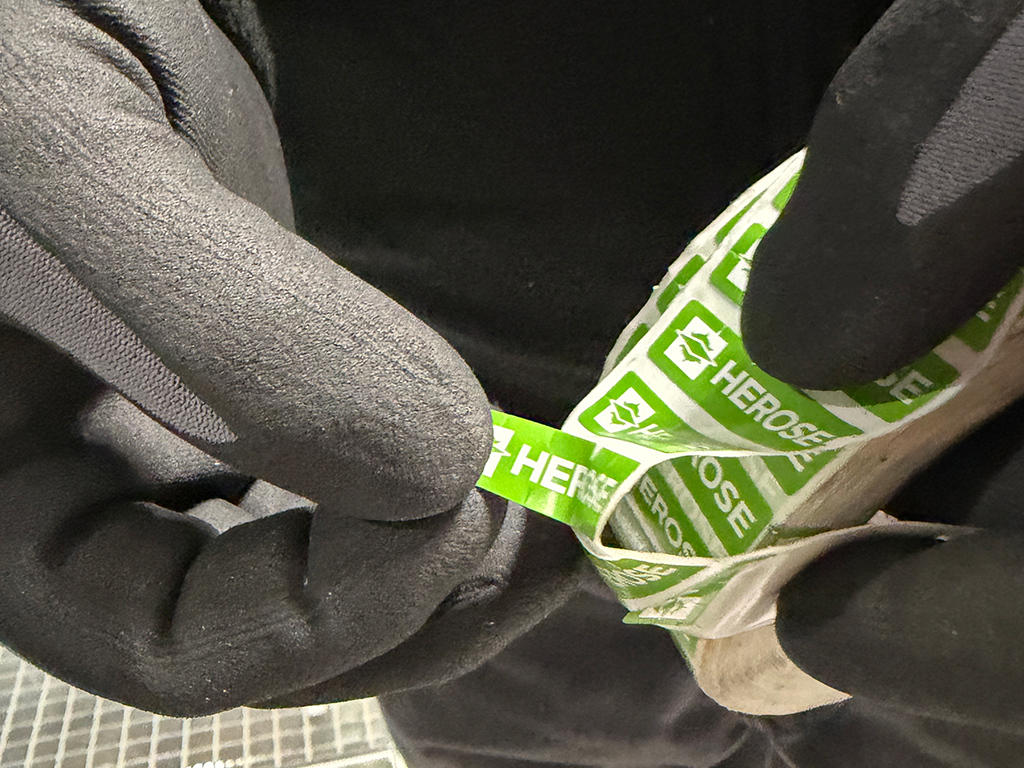
HEROSE technicians provide worldwide service for ships and industrial plants, offering specialist expertise and original spare parts. This ensures the highest quality standards and supports long-term performance and operational safety. After servicing, the valves receive the HEROSE seal.
Contact Service:
Thies Evers
service@herose.com
Fill her up please!
The Costa Toscana is regularly bunkered with LNG in Barcelona by the bunker ship Haugesund Knutsen. The LNG is fed into the ship’s system at a pressure of around three bar – the tank nozzle on board the ship is as thick as a person’s thigh. A complete refuelling operation typically spans around six hours, during which large volumes of LNG are transferred with precision and strict safety oversight. In case of any irregularities, the emergency shut-down valve provides immediate protection, closing rapidly through its robust multi-actuator system. The HEROSE team carries out a comprehensive service on this critical component as well. After an extended period working on board, with only minimal time off the ship, the technicians are now looking forward to returning to Bad Oldesloe – having remained fully committed to the task from start to finish.
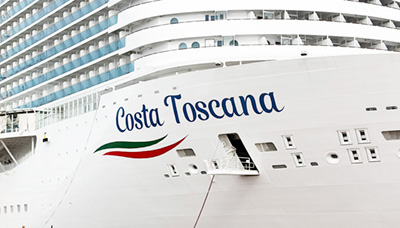
Costa Toscana
The ship, part of the Costa Crociere fleet, was specially built for the use of LNG at the Meyer shipyard in Turku, Finland. LNG technology significantly reduces emissions and is a major step towards sustainable operations.
 Read the current digital customer magazine now!